
Close to the house
Test a sheltered table, a comfortable route home, and somewhere for the practical routines of beach life. Enclosure follows the architecture and observed exposure.
Island field notes · 02
An open landscape invites a different kind of restraint. We explore how a garden can offer privacy and comfort while keeping the sense of sky, distance, and coastal life.
How we begin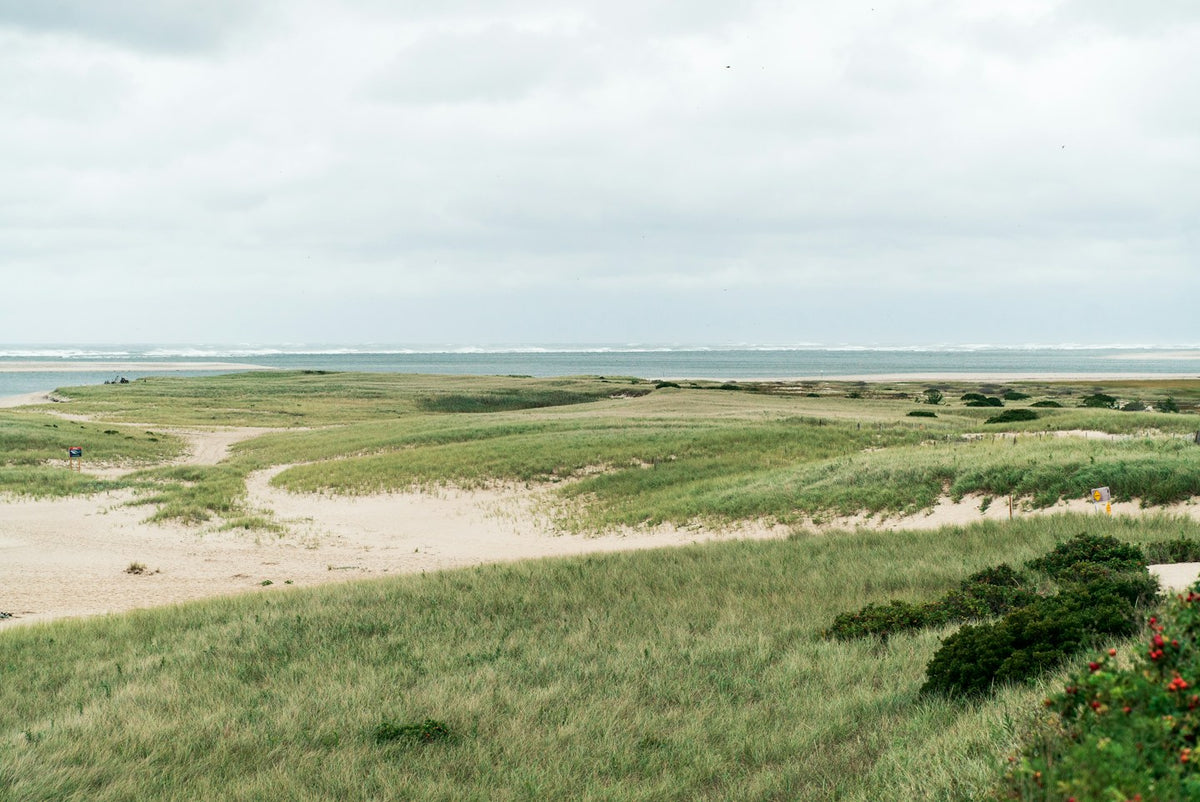
Illustrative reference photograph · Coastal character.
Reading the plain
Katama includes sandy outwash ground, grassland, and agricultural land. Its character reaches beyond the beach. We look at the position of the property within that wider landscape before choosing a design direction.
At Katama Plains Wildlife Management Area, MassWildlife describes grassland and shrubland with little bluestem, scrub oak, huckleberry, and blueberry. This local plant community offers a reference for observation; a garden palette still depends on the soil, exposure, and conditions of the individual site.
Shelter & distance
Test a sheltered table, a comfortable route home, and somewhere for the practical routines of beach life. Enclosure follows the architecture and observed exposure.
Compare lower planting and fewer interruptions where they suit the view and site conditions. Review mature height, establishment needs, and continuing care before choosing a palette.
From character to detail
Every direction is tested against the individual property: its exposure, soil, water movement, architecture, mature planting dimensions, and the care available to support it.
Identify the views that give the property its openness. Study the mature height of planting and the position of outdoor elements before the composition is settled.
Locate dining, seating, and gathering spaces with attention to wind and the time of day. Explore shelter through the relationship of architecture and planting.
Consider quiet stone, gravel where suitable, and timber that complements the house. Look at color in full sun, surface comfort underfoot, and how each material meets planting.
Explore grasses and a layered planting structure appropriate to the site. Check soil, salt exposure, and moisture before deciding which species and combinations belong.
Plan the route between arrival, storage, outdoor living, and the house. A small change in layout can make everyday island life feel easier.
Agree how planted areas should look through the seasons, how they will be established, and what care is needed to retain the intended openness as the garden matures.
We discuss where you already sit, where wind interrupts a meal, and how the light moves across the house. Those observations help locate the first outdoor rooms.
We review the available information and arrange investigation where needed. Existing fill, drainage, and soil variation can change the design and planting approach within one property.
No. The design can include a richer range of planting, with the composition and species chosen for the specific conditions, desired atmosphere, and agreed care plan.
The linked sources inform the history and landscape context. Design observations are The Local Tide’s interpretation, developed further for each property.
Landscape designers · Martha’s Vineyard