
At the arrival
Notice the route, boundaries, and first view of the house. Ask which existing features give the approach its character.
Island field notes · 01
A Chilmark property may suggest stone, wooded edges, and changing levels. Its actual conditions come first: even within one town, soils, exposure, and the character of the land vary.
How we begin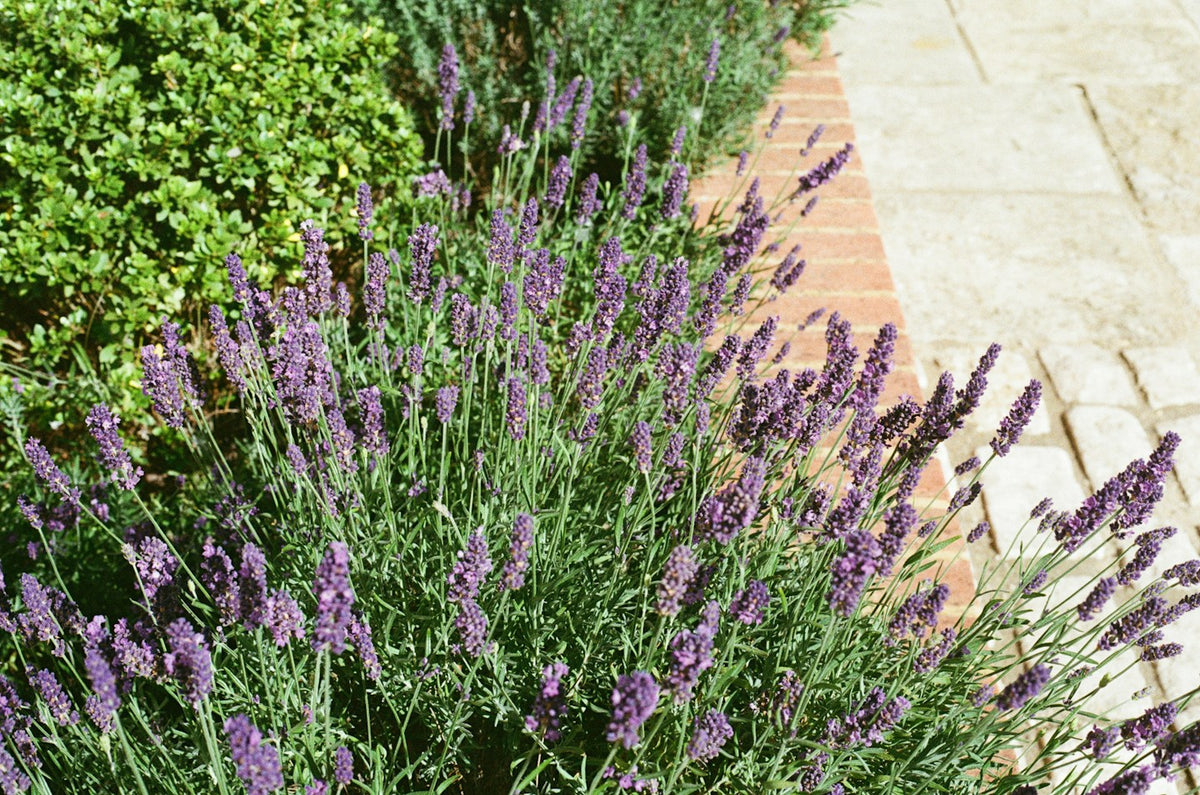
Illustrative reference photograph · Planting texture.
Stone. Canopy. Contour.
Chilmark’s hilly, rocky uplands are part of its glacial inheritance. Yet the town also contains different conditions: the Chilmark Pond watershed includes sandy outwash as well as moraine. A close reading of the site matters more than a general picture of the town.
A walk through the property
An old wall, a mature tree, or a familiar view may be the reason to keep part of a property just as it is.
Notice the route, boundaries, and first view of the house. Ask which existing features give the approach its character.
Observe how the garden changes height and where water appears to travel. Consider comfortable relationships before proposing terraces or walls.
Look at canopy, shelter, and the view beyond. Compare where enclosure helps and where the garden should remain open.
These observations are a starting point, not a survey or technical assessment. Proposed grading, drainage, structures, tree work, and any required permissions need appropriate investigation and specialist input within the agreed scope.
From character to detail
These are directions we would explore when the property supports them. We develop the palette and layout through site visits, sketches, and conversation.
Consider a restrained threshold, a clear place to arrive, and a view that reveals the house gradually. Work with existing walls and trees where their condition and position allow.
Explore stone with a quiet surface, simple timber details, and a small family of materials. Compare samples against the house, then resolve joints, edges, and changes in level carefully.
Look for places where dining and gathering feel held by the house, landform, or planting. A series of modest spaces may offer more comfort and variety than one large paved area.
Study the existing canopy, understory, soil moisture, and sun before building a planting palette. Use layers and seasonal change to connect cultivated areas with their surroundings.
Choose the important sightlines from inside and outside the house. Frame them with the retained landscape and carefully placed planting.
Define which edges should remain crisp and which can become looser. Plan pruning around the intended scale of the garden and the long-term character of existing trees.
A story from the shore
The Museum’s account of King’s Paint Mill connects the Chilmark shore with a history of clay pigments. Explore that documented story and our material interpretation in Materials & island memory.
We take this as an invitation to notice the island’s subtler colors: mineral neutrals, muted warmth, and the tones revealed as materials age.
Materials & island memoryA mature canopy, the line of a wall, or a view from a favorite room may become the starting point. We discuss those qualities before deciding what to change.
We review the survey and walk the routes you use. The aim is a comfortable relationship between rooms, paths, and terraces, with technical input for grading and retaining structures where required.
Yes. A contemporary design can respond closely to the contours, planting, and material character of its surroundings. We look for a coherent relationship across the whole property.
The linked sources inform the history and landscape context. Design observations are The Local Tide’s interpretation, developed further for each property.
Landscape designers · Martha’s Vineyard