
At the house
Compare scale, joint pattern, texture, and the existing architecture. A threshold may call for clarity and precision; its fit is tested on the property.
Island field notes · Material & memory
A palette is more than a set of finishes. We consider where materials meet, how they feel in use, and the character they acquire with time.
See the design process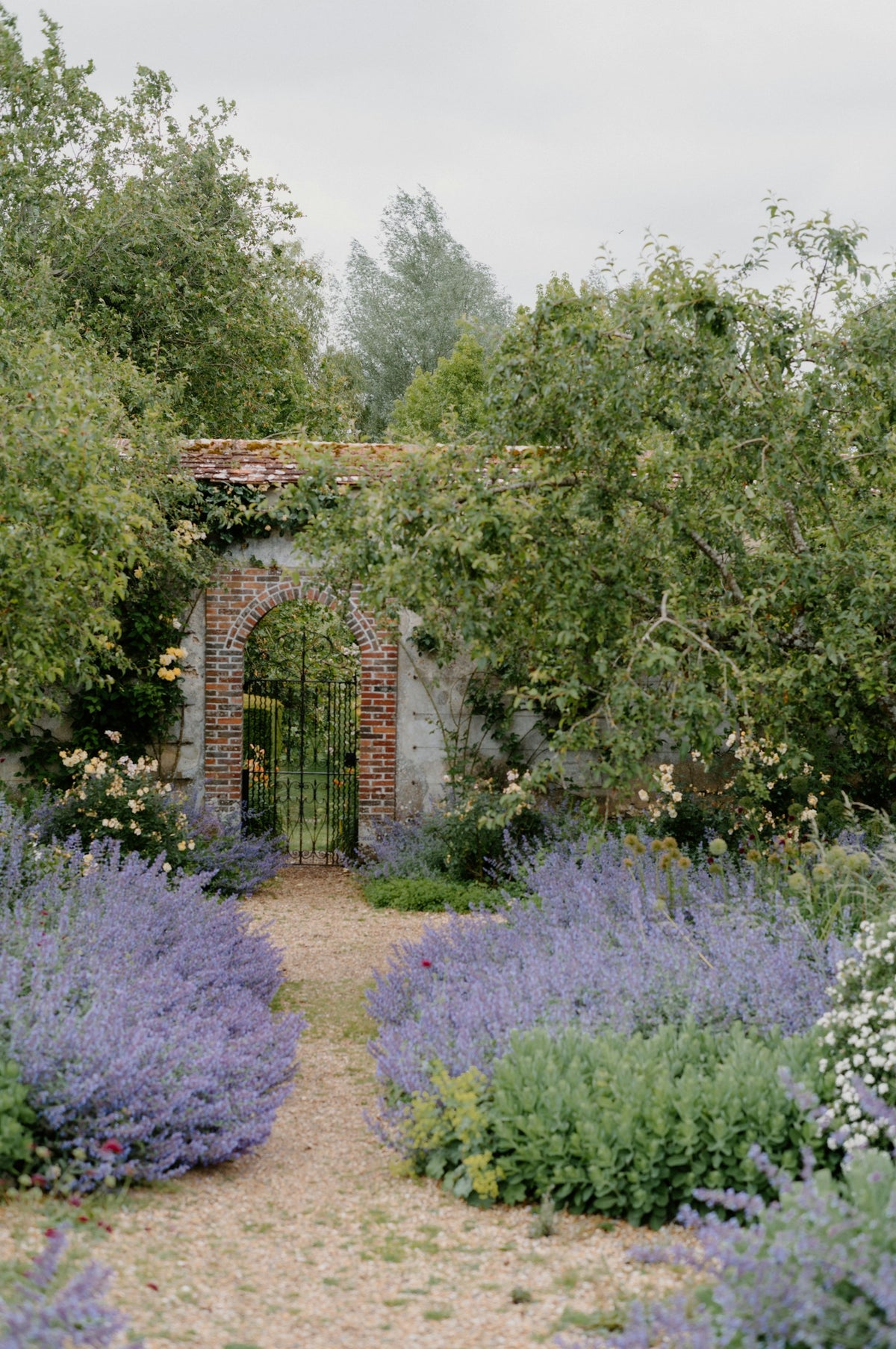
Illustrative reference photograph · Garden thresholds.
Beside the house. Within the garden.
Compare scale, joint pattern, texture, and the existing architecture. A threshold may call for clarity and precision; its fit is tested on the property.
Consider how the same material meets soil, planting, and open ground. A softer edge may belong, but no formal-to-wild rule applies to every site.
Review physical samples together on site, in sun and shade and, where appropriate, wet and dry. Discuss weathering, repair, cleaning, and the care required to retain the desired appearance.
Material decisions
We refine the relationships between surfaces as carefully as the surfaces themselves. A coherent set of details gives a garden its calm.
Compare size, finish, and joints against the architecture. Ask how the chosen finish behaves in use, how joints will be maintained, and whether individual pieces can be repaired or replaced.
Compare grain and tone now and as timber weathers. Ask whether the desired appearance depends on regular treatment, and what future repair or replacement would involve.
Compare color, texture, sound, and comfort underfoot. Discuss slope, accessibility, containment, replenishment, and the care needed to keep the surface useful.
Compare mature foliage and form with the line of a path or wall. Give plants room to develop, and discuss how growth, pruning, and access for care affect that meeting.
From the island’s history
The Martha’s Vineyard Museum describes King’s Paint Mill on the Chilmark shore, where colored clays were dried and milled into powder for paint. The business flourished in the nineteenth century and had closed by the early 1880s.
For our studio, this history suggests a way of looking: notice the mineral colors in the landscape, the warmth in a weathered surface, and the changes brought by light. It inspires a contemporary palette, interpreted for each property.
One palette, different emphasis
A more enclosed garden may call for depth and texture. An open site may ask for fewer interruptions to the horizon. The full composition guides the selection.
Field notes · 01
A design reading of stone, wooded edges, changing levels, and the quieter traditions of a New England garden.
Explore ChilmarkField notes · 02
Open sky, long views, and the meeting of beach life, grassland, and working land. A lighter approach to enclosure.
Explore KatamaHistorical context is credited to the Martha’s Vineyard Museum. The palette and design observations are The Local Tide’s own interpretation.
Landscape designers · Martha’s Vineyard